AI
Creating a commercial for businesses used to mean big crews, long timelines, and heavy production costs. In 2026, that process looks very different. AI video tools now help teams produce full commercials, paid ads, and brand campaigns without slowing down their marketing plans.
If you’re running paid campaigns, you already know how fast things move. New creatives are needed constantly. Product launches come with tight deadlines. Brand teams expect consistency across every channel.
AI video tools make it possible to create, update, and launch commercials without long production cycles. Teams can compose ads, adjust messaging, and maintain brand consistency from one platform instead of juggling multiple tools.
In this guide, we’ll look at five of the top AI video tools for business commercials in 2026 to help you choose the right platform for your team, your workflow, and your campaign goals.
| Tool | Best for | Main strength |
| Renderforest | Full commercial production and paid campaigns | End-to-end workflow for scalable business video |
| Descript | Scripted, voice-driven videos and podcasts | Text-based editing and fast content production |
| Runway | Cinematic and experimental visuals | Advanced generative video and creative control |
| Lumen5 | Turning written content into marketing videos | Fast text-to-video for social distribution |
| Steve AI | Animated explainers and script-based promos | Quick text-to-animation for business content |

Renderforest is designed for businesses that need to produce commercial-quality video at scale, from short form ads to full business commercials. It supports both image-based and video-based ad creation, making it flexible for different campaign types and production needs. For teams running paid campaigns, it functions as a practical AI commercial generator rather than a single-format video tool.
Unlike single-purpose AI tools, Renderforest covers the entire video production workflow, making it an all-in-one tool. Teams can generate visuals, assemble scenes, add voiceovers, apply branding, and export finished commercials from one platform. This makes it work really well for marketing and promo videos, training videos, internal communications, and company-wide video content.
Teams can even produce short-form social media ads without changing tools or workflows with Renderforest’s AI TikTok video generator.
Renderforest also supports centralized video creation, so organizations can create, manage, and host video content while maintaining governance, brand consistency, and security standards across departments.
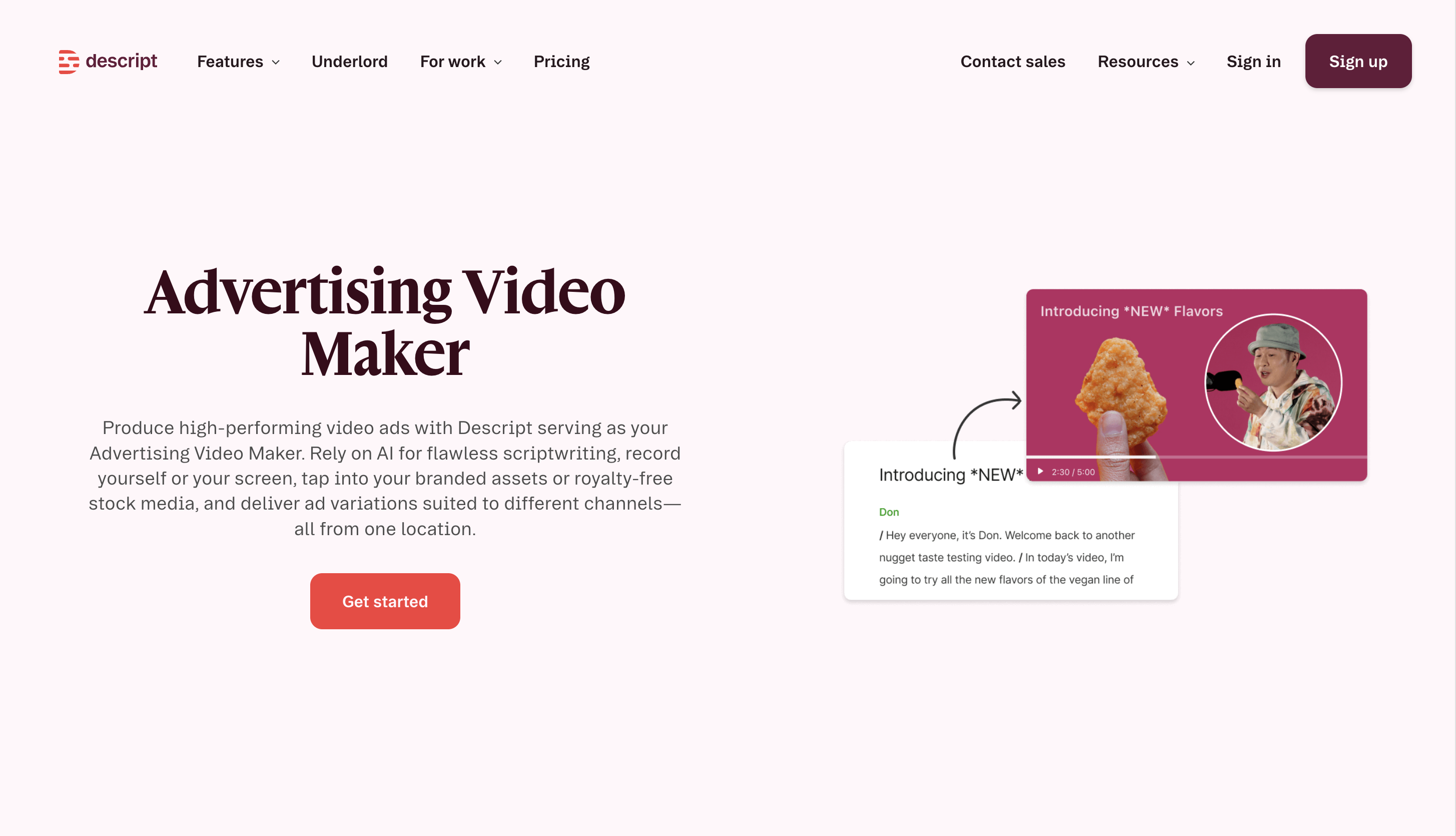
Descript is a video and audio editing platform that focuses mainly on scripted and voice-driven content. A lot of people use it for podcasts, product explainers, tutorials, and marketing videos where spoken content leads the story. Instead of editing on a complex timeline, users can edit the transcript like a document, which makes it easier for teams that start with a script.
For teams creating regular updates, training videos, or thought leadership content, this workflow can save time. You can record, transcribe, edit, add captions, and polish audio in one place. While Descript supports video projects, it works pretty well for communication-heavy content rather than full commercial ad production or visually complex campaigns.

If your goal is to create cinematic visuals that are different from standard ad formats, Runway is probably worth exploring. It’s a generative AI video platform focused on creative visuals and AI-driven video generation. Most people use it for concept videos, stylized campaigns, and experimental content.
Runway allows teams to generate original video clips from text prompts or images instead of templates. This makes it a strong option for projects that need custom scenes, dynamic motion, or a more artistic direction. While it can support advertising workflows, it works best when the priority is visual creativity rather than structured commercial production.

If you already create blog posts, articles, or reports, Lumen5 helps you turn that content into marketing videos in minutes. It’s built mainly for content and social teams that want to repurpose written material into short, engaging videos without starting from scratch.
Lumen5 uses AI to pull key points from your text and match them with visuals, layouts, and music. You can adjust scenes with simple drag-and-drop controls and apply brand settings to keep everything consistent. It works especially well for social distribution, thought leadership clips, educational content, and ongoing marketing updates.
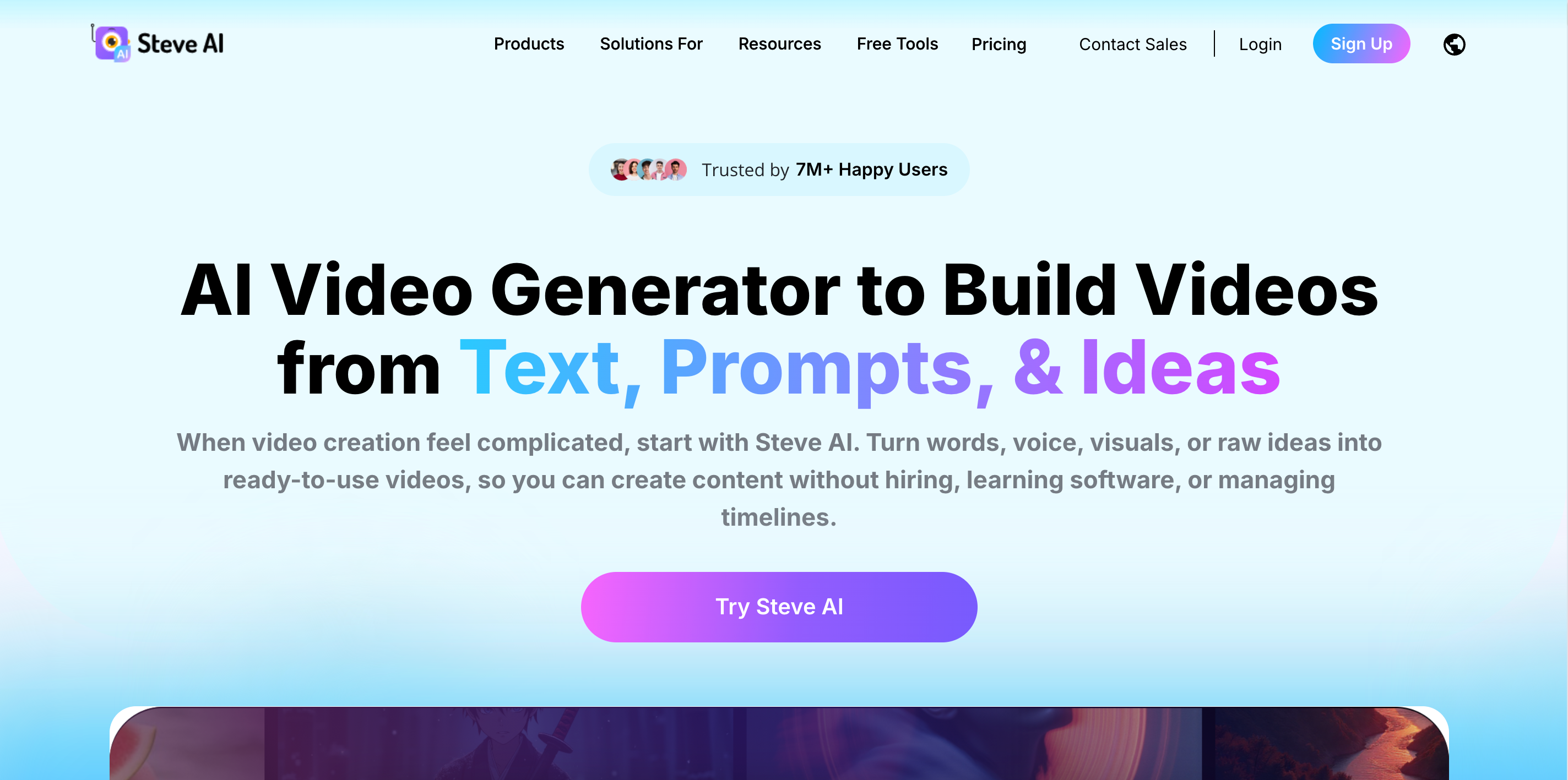
Steve AI is built for businesses that want to turn scripts and marketing messages into animated videos quickly. It focuses mainly on AI powered animation and explainer style content, which makes it useful for teams creating product overviews, training materials, and promotional videos without filming live footage.
The platform converts text into animated scenes using predefined styles and characters. Users can input a script, choose a visual theme, and let the system assemble scenes automatically. While it supports commercial use cases, it works best for animated explainers and presentation driven ads rather than highly cinematic or fully custom generative campaigns.
For teams that rely heavily on script based storytelling and want animated output without complex editing, Steve AI provides a straightforward workflow.
Key features:
The right AI video generator depends on what you’re trying to produce and how your team works. Some tools focus on scripted, voice-led content. Others prioritize creative visuals or fast ad testing. Before choosing a platform, think about the type of commercials you create most often, how many versions you need, and how important brand control and workflow consistency are for your team.
If your goal is to run ongoing campaigns, manage multiple formats, and keep everything consistent across departments, an end-to-end platform makes more sense. Tools like Renderforest support visual generation, scene editing, branding, and final exports in one place, which helps teams manage commercial production without switching between systems.
If your focus is mainly podcast-style videos, cinematic experiments, content repurposing, or rapid ad testing, a more specialized tool may fit better. The key is to match the platform to your commercial goals, production volume, and internal workflow.
The best choice depends on how your team works and how much video you produce. If you need to create different types of ads and commercials regularly, an all-in-one platform like Renderforest makes it easier to manage everything in one place. Teams that only focus on one format may prefer more specialized tools.
Product launches often require multiple videos across different platforms. AI tools help you create launch videos faster, test different messages, and adjust creatives without restarting the whole process. This allows teams to stay flexible as campaigns roll out.
eCommerce brands usually need a constant flow of product ads for paid campaigns and promotions. AI tools make it easier to create variations, update offers, and localize content for different audiences. This supports faster testing and more consistent output.
Business teams often need a platform that supports collaboration, brand consistency, and repeatable production. Tools like Renderforest work well because they cover the full video workflow, from visual creation to final export, without switching systems.
Brand control keeps your videos consistent across campaigns and channels. When logos, colors, and fonts are standardized, every ad looks aligned with your brand. This builds recognition and helps you leave a lasting impression.
Share this


Article by: Sara Abrams
Sara is a writer and content manager from Portland, Oregon. With over a decade of experience in writing and editing, she gets excited about exploring new tech and loves breaking down tricky topics to help brands connect with people. If she’s not writing content, poetry, or creative nonfiction, you can probably find her playing with her dogs.
Read all posts by Sara Abrams